
Collier Previous-Resident Sources by Era
A backward address trail has two parts. Title records identify owners, while household sources identify occupants. Collier County's online deed images now reach back to county creation, but the live verified name index and the most detailed legal-description tools cover shorter spans. The table separates those layers so that a missing web result is not mistaken for a missing record.
| Source | Years Covered | Where Held | What It Shows |
|---|---|---|---|
| COR official records | 1923 to present announced; verified index from 1957 | Clerk online and counter | Deeds, liens, plats, title instruments |
| COR legal search | Chiefly 2003 to present | Clerk COR portal | Lot, block, subdivision matches |
| Naples Polk directories | 1955, 1957 through 1960; 1970 title identified | Library and licensed collections | Listed adults and addresses |
| Federal census | Schedules through 1950 | NARA and library databases | Household members and relationships |
| Permits and code | County portal from 2011 | CityView or municipality | Work, applicants, inspections |
| Plats and aerials | Varies | Clerk, GIS, museums | Street and site continuity |
Start recent work with the parcel card and newest deed. For a mid-century household, add directories and the open census. Earlier than Collier County's 1923 creation, check Lee County and state or territorial series because the land then belonged to another county.
Start Collier Address History With Folio
The Collier County Property Appraiser provides the best current anchor. Search the situs address, which means the physical site. Save the parcel or folio number, legal description, owner, and latest qualified sale. Do not substitute the owner's mailing address. That field only tells where the tax notice goes and may point to a post office box, manager, or another state.
The parcel card may list a deed book and page or instrument link. Homestead status can support an inference that an owner occupied the property, but it does not name all household members. Condominiums need extra care because many units can share one mapped polygon. Search by condo name and unit when the map does not expose every folio.
Record flow: situs address → folio and legal description → current deed → prior grantor → earlier deed → directory or census household.
Follow Collier Deeds Backward
The COR Official-Land Records Public Inquiry System is the core source for previous residents who owned the parcel. A grantor transfers an interest; a grantee receives it. Search the present owner's purchase as a grantee, read the deed for the seller, then search that seller's earlier purchase. Confirm every link with the legal description because a matching name alone can lead to another property.
- Copy the folio, legal description, owner, and newest sale from the appraiser record.
- Select DEED in COR and search the owner as grantee within a useful date span.
- Record grantor, grantee, dates, instrument number, and land description.
- Search the grantor as a grantee to find that party's acquisition, then repeat.
- When broad searching stops, ask Recording staff about converted images or microfilm.
- Chain of title
- The linked transfers for the same land.
- Grantor and grantee
- The party giving an interest and the party receiving it.
- Legal description
- The formal lot, block, subdivision, or metes-and-bounds identity.
The web index is a finding tool. The instrument controls, and a certified copy comes from the Clerk. Released images can be viewed online free. Recording lists copies at $1 per page, certification at $2 per document, and staff searches at $2 per name, instrument, and year.
Collier Record Fields Change by Year
Coverage needs precise wording. In 2025, the Clerk converted more than one million paper and microfilm pages and announced public access back to Collier County's 1923 creation. The live COR range page separately reports a verified main index from January 2, 1957 and advanced legal or case criteria from October 13, 2003. An image can exist when every modern field does not.
The form accepts names, business name, instrument number, book/page, document type, and dates. Try initials, spouse forms, trusts, and entity suffixes because recorded spelling controls retrieval. The Clerk's digitization account explains the conversion.
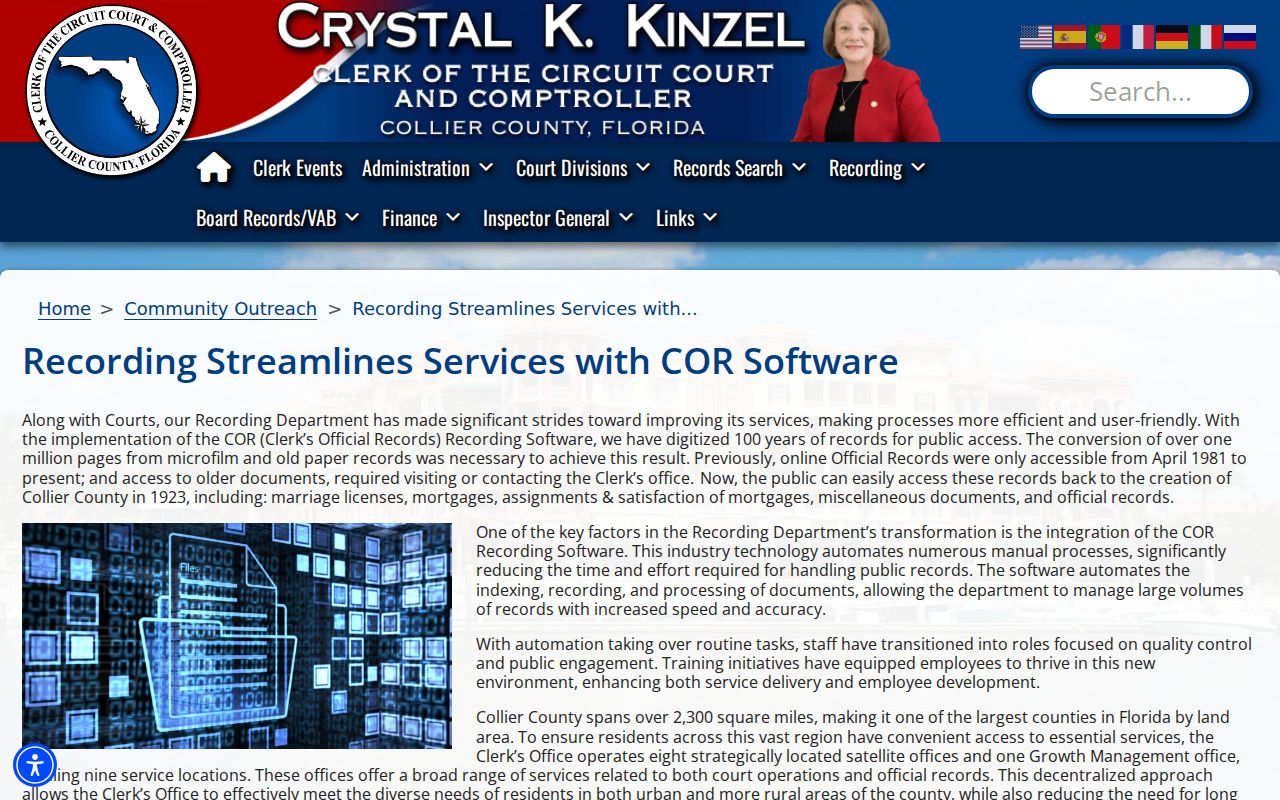
This difference prevents false dead ends. If a party search fails before 1957, move to a known book/page, staff help, or microfilm instead of concluding that no prior record exists.
Inspect Collier Previous-Resident Results
The COR document search returns instrument number, recording date, document type, party roles, book/page, indexed legal description, and image access when released. Compare the land description with the appraiser record before adding a name to the chain.
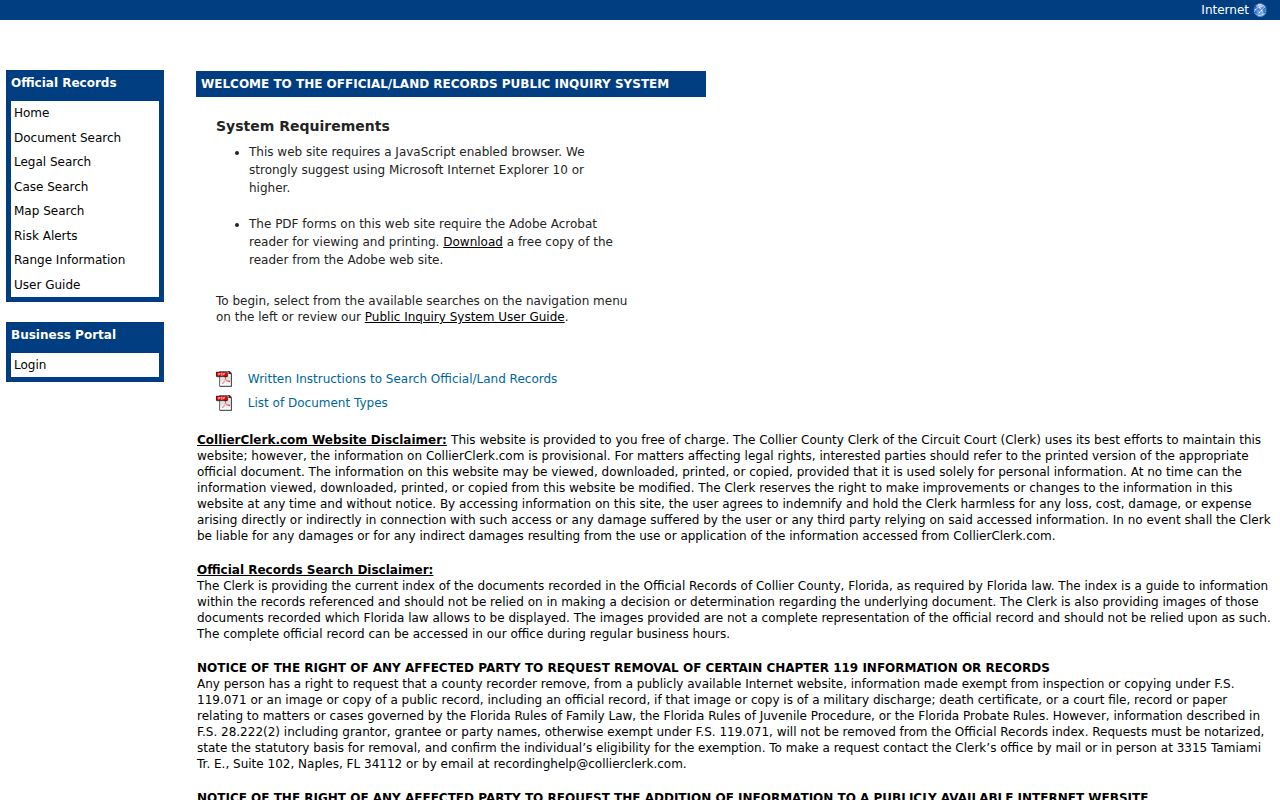
Use separate search modes with care. A name starts the work, while instrument, book/page, and legal criteria become safer as the chain develops.
The live coverage display documents the current searchable spans.
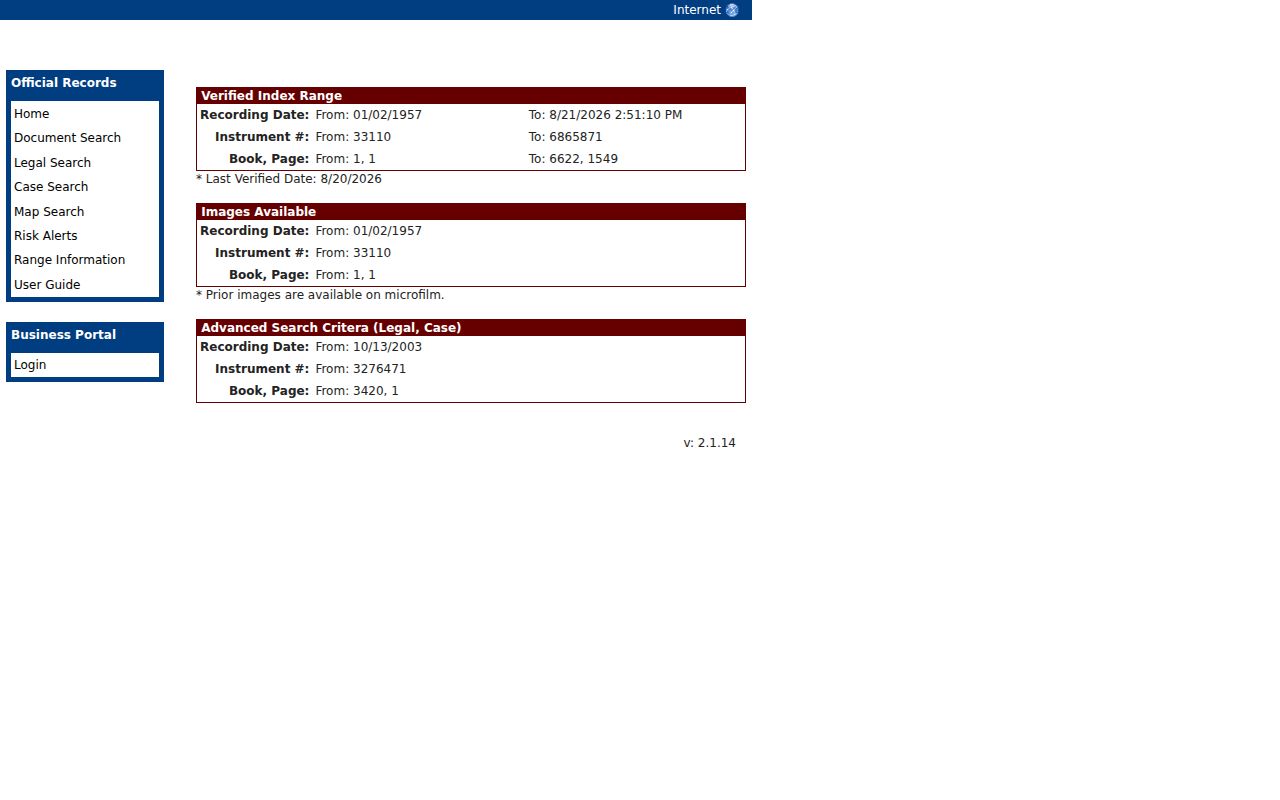
The range screen is better evidence than a broad claim that all fields reach county creation. Restricted images may also remain hidden even when an index line is public.
Match Collier Previous Residents to Households
Deeds prove title, not everyone who lived at the address. Naples Polk directories verified for 1955 and 1957 through 1960 bridge the period after the latest open federal census. A 1970 title also has bibliographic support. If an edition has a reverse or criss-cross section, the key changes from surname to street or phone, but Naples Regional staff should confirm the run.
- Locate the household in the 1950 census and record names, relationships, and location clues.
- Check 1955, then 1957 through 1960 directories for the surname and address.
- Compare spouse, work, and address only after reading the edition's abbreviation key.
- Ask Naples Regional about reverse volumes, phone books, newspapers, obituaries, and yearbooks.
A disappearance can mean death, a move, seasonal residence, omission, or changed directory geography. The collections themselves belong on the Collier County city directory page. Here they supply evidence for one address.
Lawful use. Research past residents for house history, genealogy, heirs, or personal curiosity. Never use a living person's address to watch, threaten, or harass them.
Date Collier Address Changes With Permits
The Collier County CityView portal can date building and code events from 2011. Public searches cover building, remodeling, trades, fire, rights-of-way, signs, wells, and code enforcement. Results may show folio, project site address, owner contact, work type, contractor, value, inspections, and status.
Those contacts are not automatically previous residents. An applicant may be an agent, and a contractor performed work. Use dates to explain when a structure changed, then use deeds, directories, or census records for identity. Basic public searching needs no account.
Jurisdiction is the trap. A Naples postal label does not prove the site was inside Naples. Resolve the folio and historic jurisdiction before picking a permit office. No verified countywide renumbering year was found, so old plats and legal descriptions are safer than an invented renumbering story.
Collier Plats Preserve Older Ground
No authoritative Naples Sanborn map run was verified. Use Clerk plats, aerial imagery, museums, and archives instead. Plats can tie an old lot to a later street as postal names or jurisdiction change. One striking example is the Calusa canal used roughly AD 700 to 1400 and shown on the 1887 Naples plat.
Rail service reached Naples in 1926, and the Tamiami Trail opened in 1928. Those points help explain new plats, deeds, and later directory entries. The Clerk community archive adds local context.
Local history can explain a trail, but each owner or household claim still needs a deed, parcel, directory, or census citation.
Order Collier Records After Verification
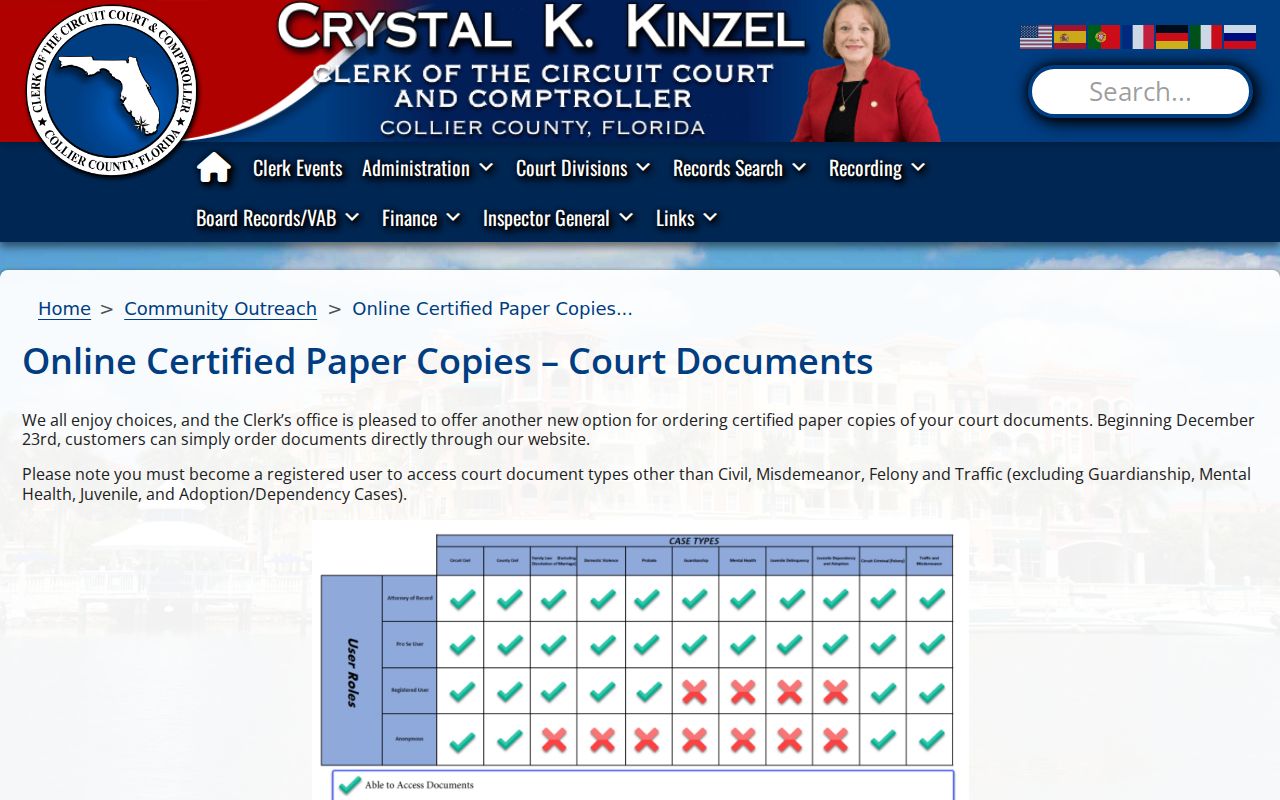
Save a plain image while testing the chain, then order an authenticated copy only when needed. The Clerk offers online certified paper copies for eligible court documents and office channels for recorded instruments. Court files and land records are distinct collections.
For links before 1923, widen the search to Lee County because Collier did not yet exist. State and territorial collections can bridge that boundary. After county creation, compare each deed's legal description with plats and later parcel data even when a road name or postal place changes. No verified Collier courthouse fire or flood explains an early gap. A missing web hit is more often a coverage, indexing, spelling, or jurisdiction problem. Preserve both the old wording and the modern parcel match in your research notes. That step keeps a renamed place from looking like a different property during the next search.
The online certified court-copy service is shown below.
Probate can close the trail when an owner died, especially when a deed later names an estate or heirs. Search the docket, then request public copies from Clerk staff. Obituaries can connect relatives, but should support the official transfer record.
Recording is at 3315 Tamiami Trail East, Suite 102, Naples, phone 239-252-2646. Give staff a party, year, instrument, book/page, or legal description. A narrow request provides a workable path into early material.