
Find Collier County Residents
Start with the fact you already know. A street address belongs first in the Collier County Property Appraiser search because its site-address mode identifies a parcel, the titled owner, the tax mailing address, and the legal description. A person's name can go into the Clerk's court party search, official-records index, or a state license database. For an older Naples household, begin with the 1950 census and the surviving Polk city directories. Each source answers a different question, so a complete residents directory search is a short chain rather than a single result.
Ownership and residence are not the same. A deed proves title. A tax mailing address may point to an absentee owner, while the situs address is the physical parcel. A directory lists the people included by its publisher, not every member of a home. Use at least two independent records before deciding that a result belongs to the right person.
- Search the Property Appraiser by owner, site address, or parcel ID. Save the parcel number and legal description.
- Check the Collier Clerk's official-records index for deeds, liens, marriage licenses, and other recorded links.
- Use the Elections Office's authenticated lookup for your own registration. Request a public voter extract when the research is lawful and broader.
- Compare the name with court dockets, professional licenses, or business filings. Match middle initials, dates, and locations.
- Ask the library, archives, or records counter when the item is not indexed online. A narrow written request can also reach releasable agency files.
Collier County Directory Offices
Three county offices supply most current Collier County resident records. Clerk Recording keeps the instrument index and recorded images. The Property Appraiser maintains the parcel roll and GIS links. The Supervisor of Elections handles voter registration and public voter-file requests. The county's Clerk site is the starting point for recording and court services, while each custodian controls its own exemptions, copy process, and certification.
Collier Clerk Recording
3315 Tamiami Trail E., Suite 102
Naples, FL 34112
239-252-2646
Collier Supervisor of Elections
3750 Enterprise Ave.
Naples, FL 34104
239-252-8683
Search Collier Property Records
The Property Appraiser offers more than a simple surname box. Owner search accepts a last-name prefix, while Site Address can broaden from a full street number and name to a street fragment. Parcel ID requires the complete identifier. Sub/Condo helps with planned communities and towers. Advanced Search can filter by ZIP code, street, property type, subdivision, section-township-range, sale period, and price.
The Collier property search is especially useful when "Naples" on the mail does not mean the incorporated City of Naples. Resolve the parcel first, then follow the jurisdiction and tax-district fields. The following captured search screen shows the available owner, site, parcel, radius, and advanced modes.
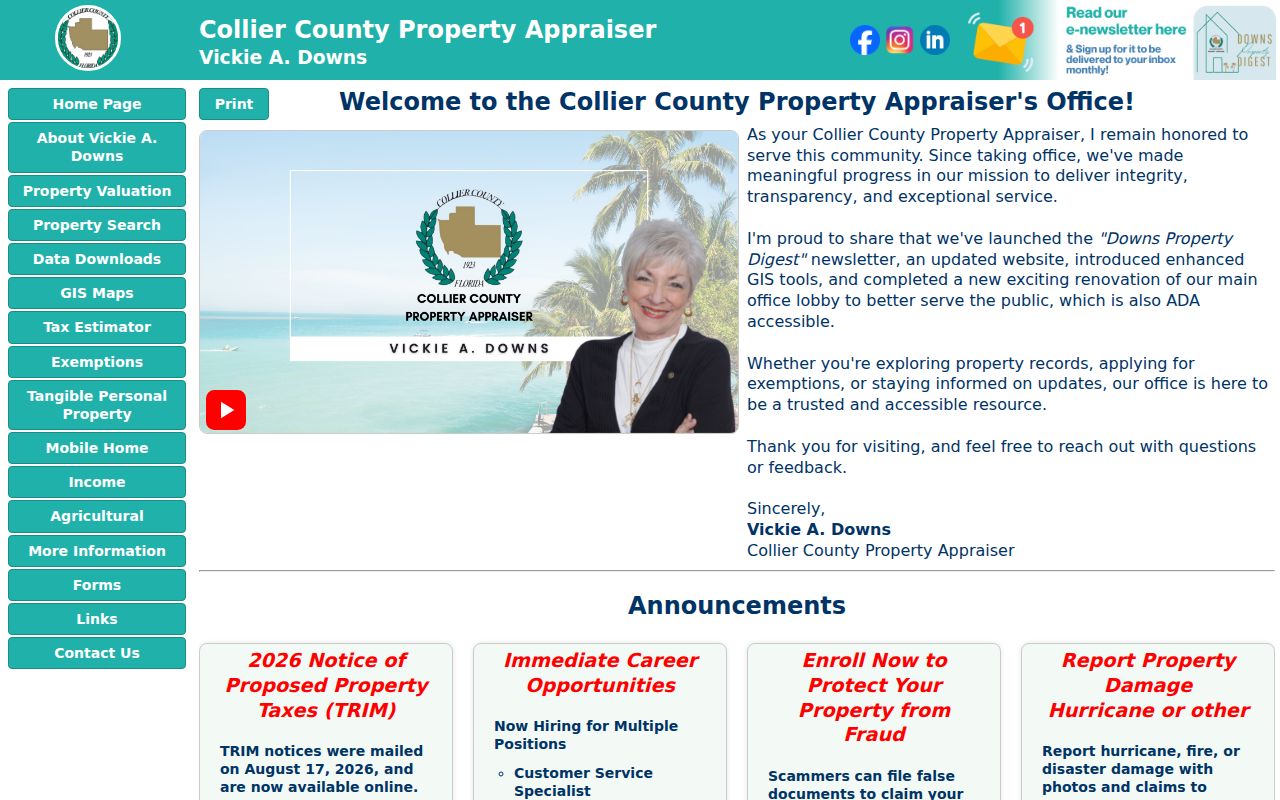
The tabs make it possible to move from one known address to the parcel, nearby properties, and the official owner record without treating the mailing address as proof of occupancy.
| Search mode | Best input | What it adds |
|---|---|---|
| Owner | Surname or entity prefix | Possible titled owners |
| Site Address | Number and street | Physical parcel match |
| Parcel ID | Complete folio | Exact parcel record |
| Radius | Parcel ID and 100 to 1,000 feet | Nearby parcels, excluding the subject |
| Advanced | ZIP, street, subdivision, or sales filters | A narrowed group of parcels |
Note: Collier says ownership data is typically current within one month of recording, so check a fresh deed when a recent sale is involved.
Read Collier County Deed Names
A property owner's name becomes a history trail in the Clerk's COR system. Search the current owner as a grantee, open the purchase deed, then use the grantor's name to find the prior acquisition. The legal description keeps same-name people and unrelated parcels apart. Grantor means the person or entity transferring an interest; grantee means the one receiving it.
The COR document search accepts last and first names, business name, instrument number, book and page, document type, and dates. Its result can show the instrument number, recording time, party roles, book/page, indexed legal description, and image access.
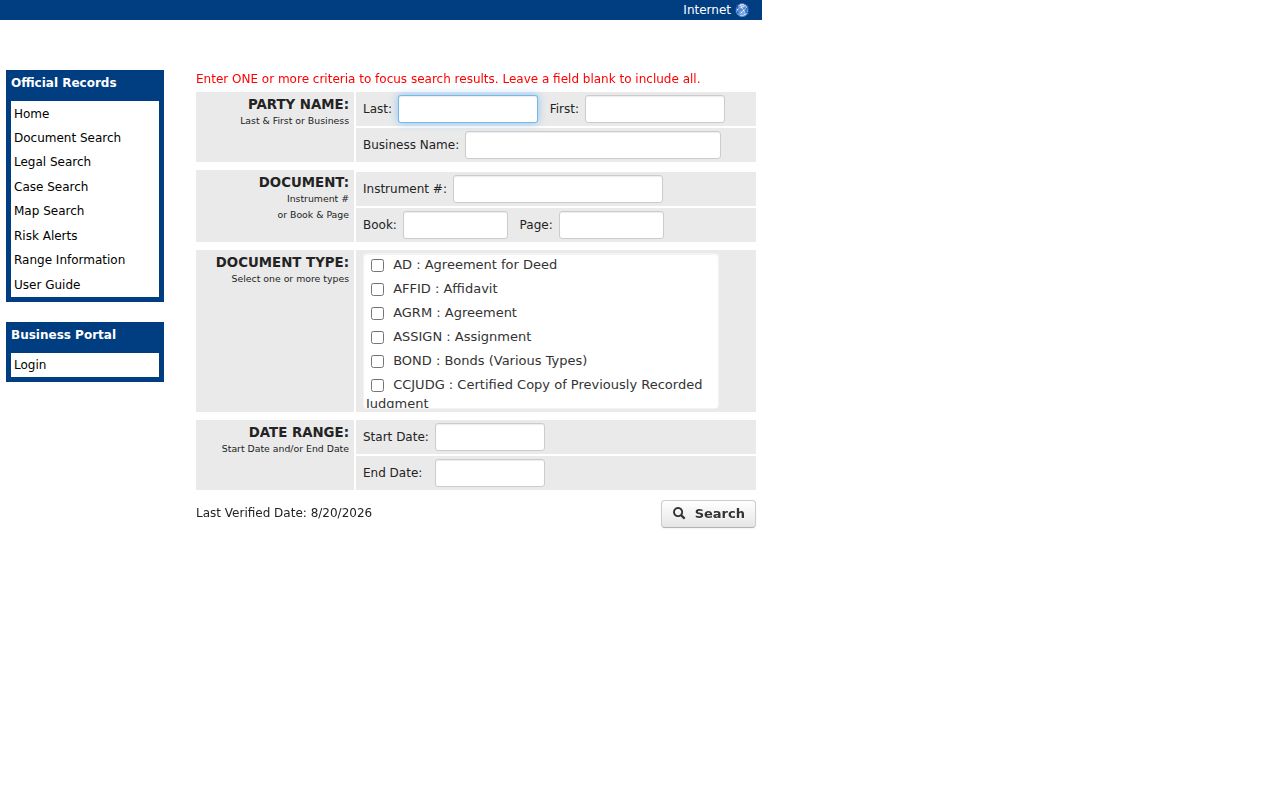
The screen supports both a broad party search and a deed-only search. Restricted images stay suppressed, and a certified copy must come from Recording even when an ordinary image is free to view.
- Parcel
- A defined piece of land identified by a county folio.
- Index
- A searchable list that points to a record; it is not always the full image.
- Legal description
- The lot, block, subdivision, or survey language that identifies the land.
- Criss-cross directory
- A directory arranged by street or telephone number instead of surname.
Collier Records Reach Back Further
Collier County was created from Lee County in 1923. That boundary is crucial: earlier land, probate, marriage, and court work may belong in Lee County or a state series. In 2025 the Clerk reported that its COR conversion digitized more than one million paper and microfilm pages, spanning about a century and extending announced image access to Collier's creation.
The live range still needs care. The verified official-records index currently reaches to 1957, while advanced legal-description fields chiefly reach to 2003. Older converted images, a known book and page, counter help, staff search, or microfilm may be needed. The Clerk's conversion account explains the project.
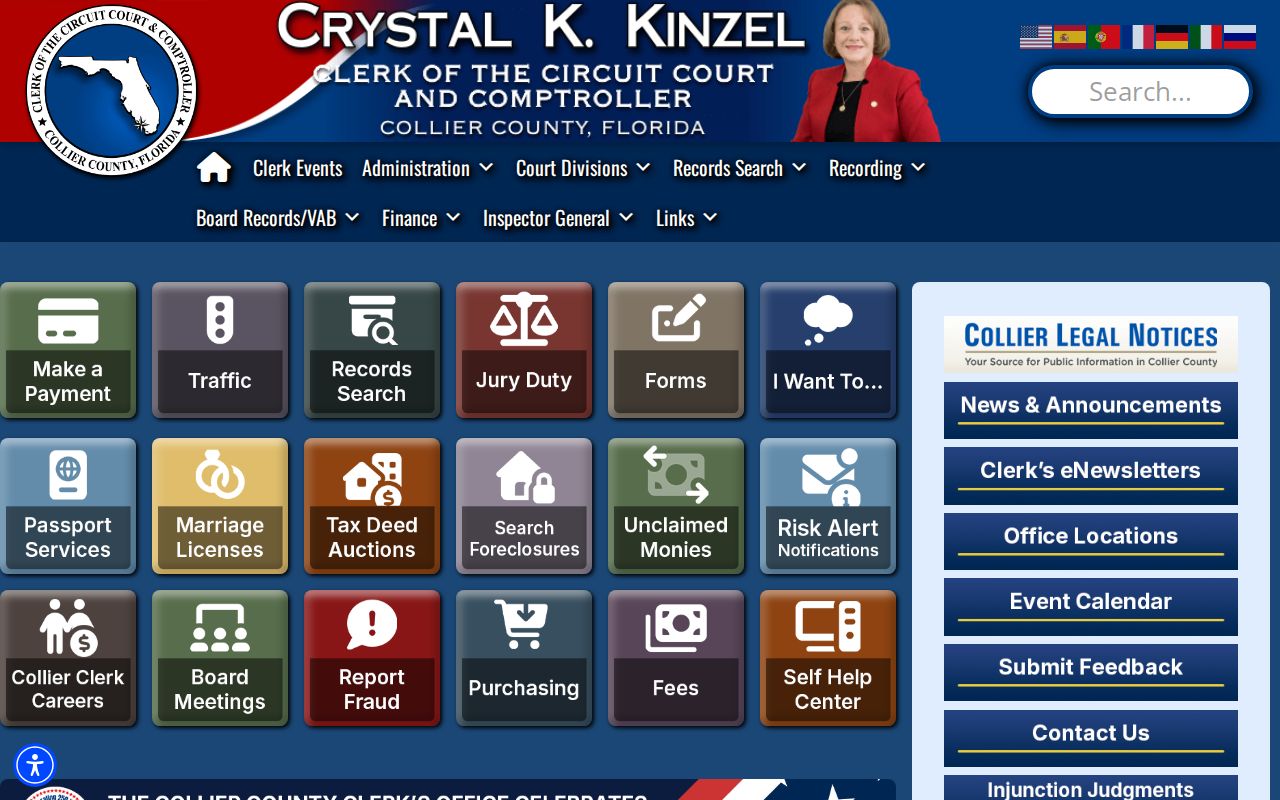
This captured Clerk page is a gateway to those services. "Online back to 1923" describes the larger image project, not an assurance that every name and field is searchable for every year.
Current Collier County Directories
Modern directory work uses several official rolls. None lists every Collier County resident. The property roll names owners, court dockets identify parties, recorded instruments identify parties to transactions, and license databases connect people to regulated work or companies. Voter information has both an authenticated self-lookup and a separate public-record request path. Public association contacts may identify leaders, but private HOA, club, and congregation rosters are not public substitutes.
| Source | Who It Lists | Keeper | Access |
|---|---|---|---|
| Property roll | Titled owners | Property Appraiser | Free portal and GIS |
| Voter information | Registered voters, with exemptions | Supervisor of Elections | Self-lookup or records request |
| Official records | Parties to deeds, liens, and recorded notices | Collier Clerk | Free index and released images |
| Court docket | Public case parties | Collier Clerk | Free web index; copies by request |
| Licenses and entities | Licensees, officers, and registered agents | Florida agencies | Free public searches |
Choose the roll that can answer the question. An owner's parcel record does not name all occupants. A court party search does not establish a home address. A business service address may only be an affiliation. When the task centers on one name, the Collier County resident lookup explains how to cross-check those differences.
Check Collier Court Party Records
Collier County lies in Florida's Twentieth Judicial Circuit. The Clerk's portal searches county and circuit civil, criminal, traffic, probate, family, and related public dockets. It accepts a case or citation number, party or business name, date of birth where allowed, case type, and filing dates. Results can show a case number, filing date, division, party roles, judge or status, and docket events.
Use the Collier court records search to test initials and name variants. A docket is the dated list of activity in a case. It is not the same as every filed image, and confidential, sealed, adoption, juvenile, and protected records do not appear like ordinary public files.
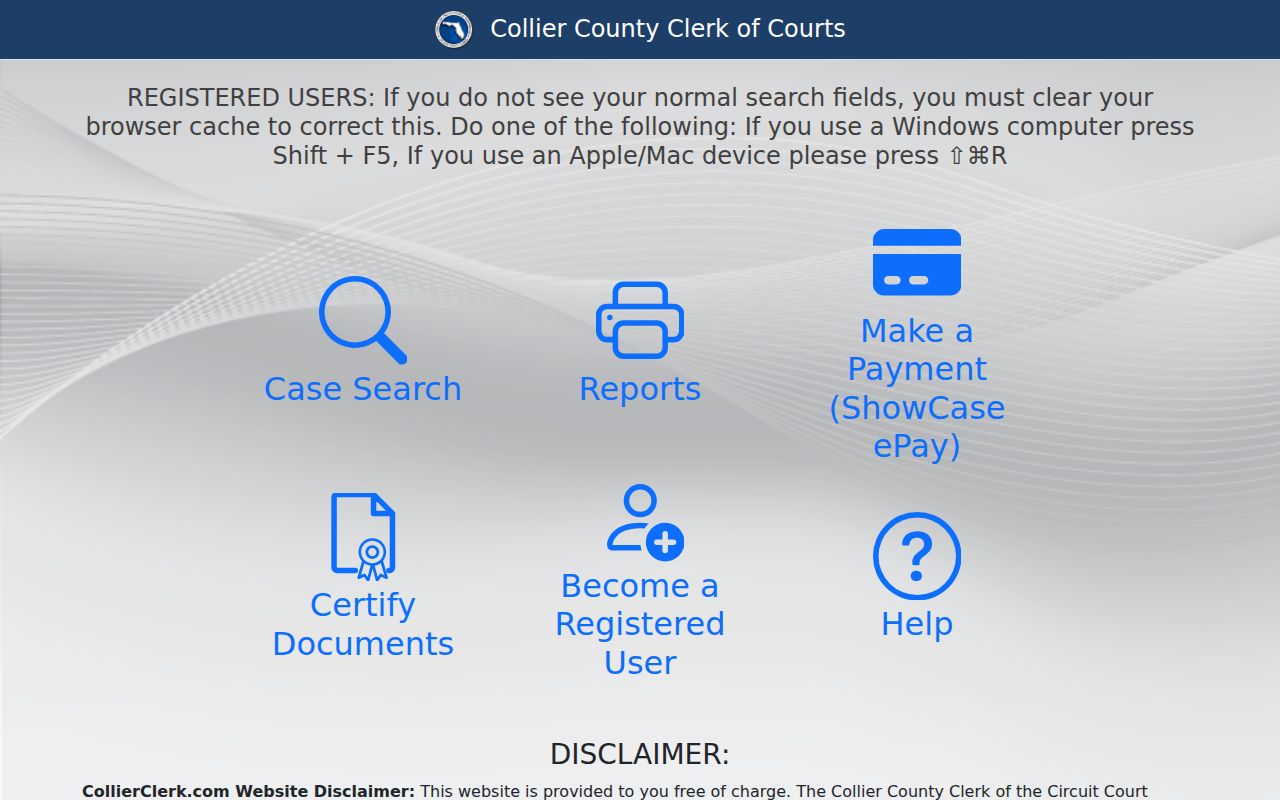
The pictured search is an index route. Older or non-imaged public material may require a courthouse terminal or staff request, while authenticated and certified copies come from the Clerk.
Use Collier Voter Records Carefully
The Elections Office separates personal registration service from public-file access. The registration-status lookup is meant to confirm a voter's own record with identifying details. It is not an open street browser. For a broader lawful request, Elections accepts its public-record route through NextRequest as well as email, phone, mail, and in-person channels. The researched voter-list fee is $10, though added programming or media costs may apply.
Florida makes much voter-file information public, but protected classes and Address Confidentiality Program participants can have fields withheld. Once public voter data reaches another publisher, correction or removal there must be handled with that publisher. Correct the source record with Elections first.
The official voter records request instructions explain the available channels and exemptions, while the captured screen below shows the authenticated status route.
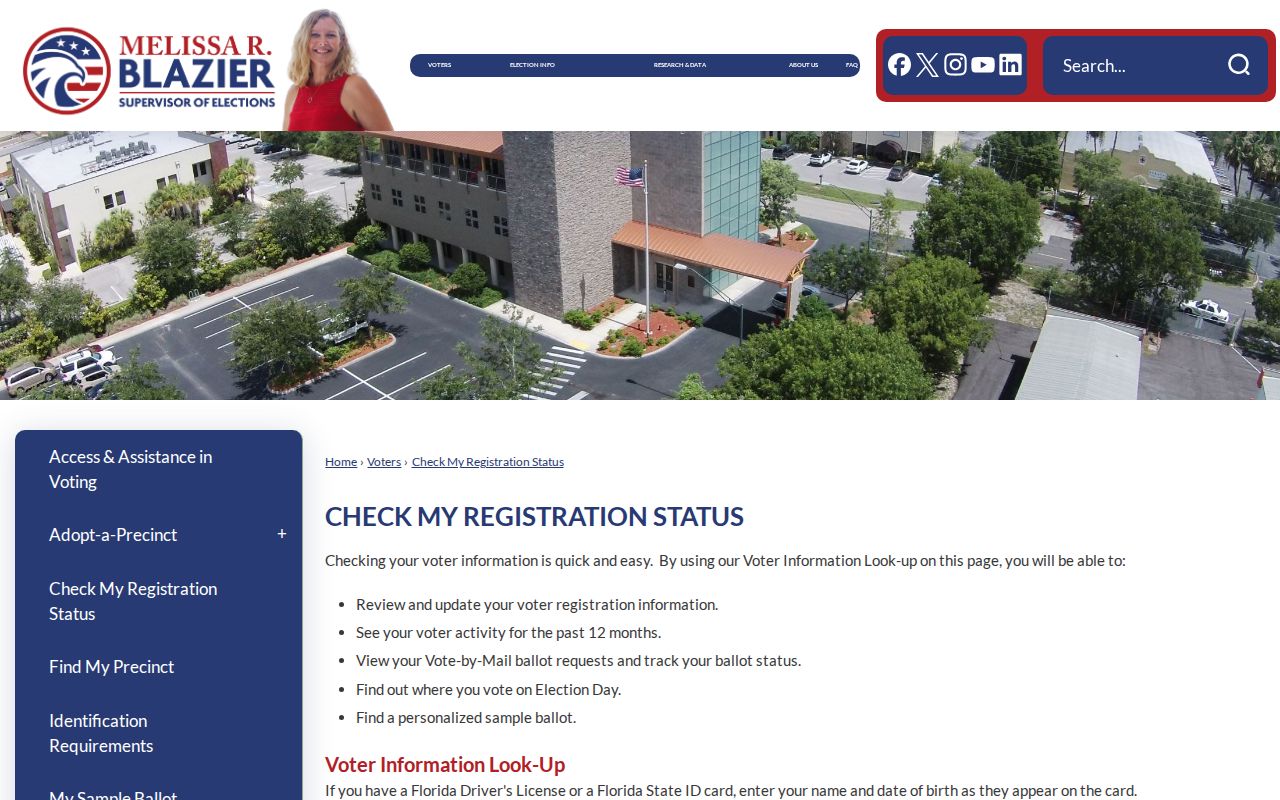
The distinction prevents a common mistake: a failed self-lookup is not proof that no public voter record exists, and a public extract can lawfully omit protected addresses.
Confirm Collier Family Links
Marriage, death, probate, and dissolution records can connect relatives, but access differs. COR includes a marriage-license document type. The court docket can identify a probate matter. Florida Vital Statistics provides state certifications for marriages and dissolutions from June 6, 1927, while the county Clerk is the better first stop for earlier Collier records and recent events not yet sent to the state.
Birth certificates are confidential under Florida law. Death records without cause are broadly available, but cause-of-death access is restricted for 50 years to specified relatives, representatives, or people with a proven estate interest. Adoption and birth-parent searches must use Florida's official Adoption Reunion Registry and statutory process, not an informal residents directory search.
The state publishes its current applications on the Florida vital-record forms page.
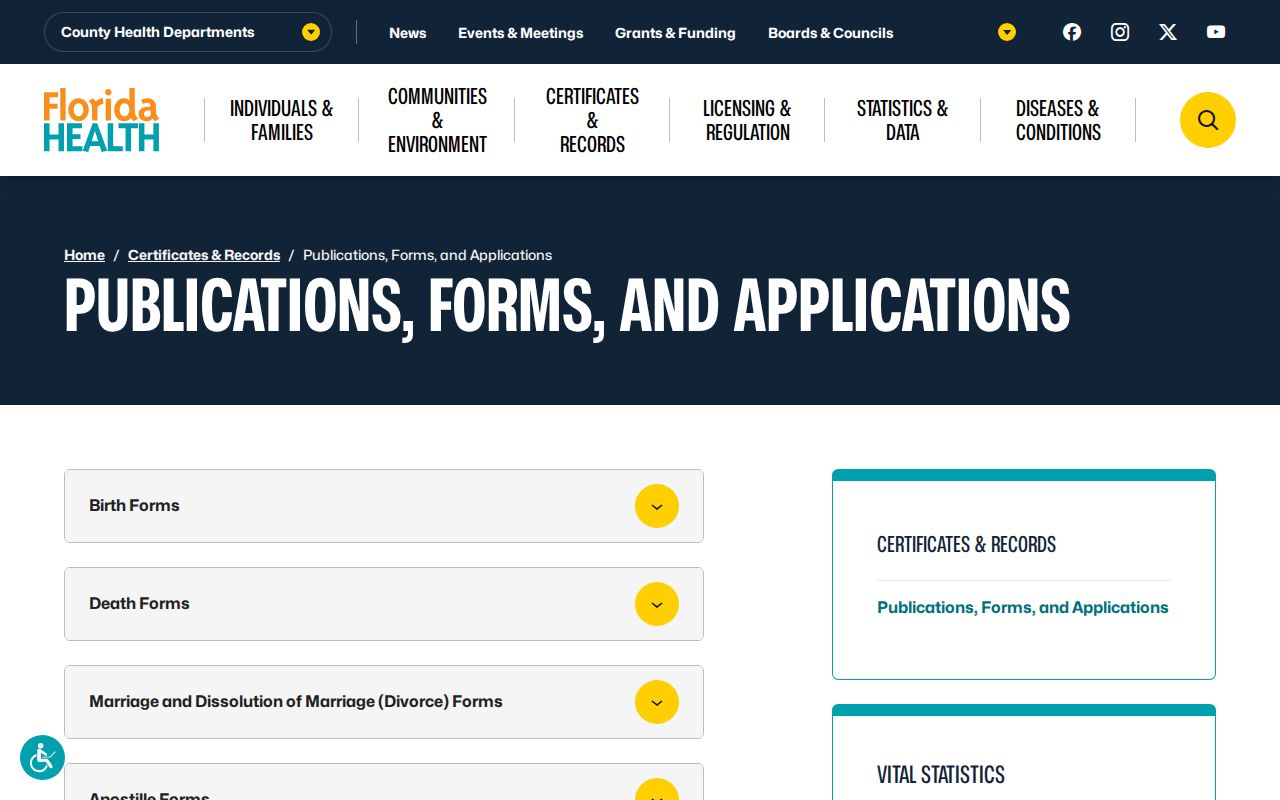
The form library shows the proper route for each certificate. Applicants should verify current state and DOH-Collier fees because channel, shipping, and rush charges can change.
Historical Collier County Directories
The verified Naples R.L. Polk sequence includes 1955 and 1957 through 1960, with bibliographic evidence for a 1970 title. One 1959 to 1960 title extends beyond Naples to East Naples, Lely Estates, Naples Park, North Naples, Pine Ridge, Sun Terrace, and Vanderbilt Beach. That broad directory geography matters when an old entry seems outside the small incorporated city.
Naples Regional Library is the first local stop for genealogy databases and staff help. Ask staff to check exact titles, reverse or criss-cross sections, telephone books, newspaper microfilm, obituary aids, and yearbooks. The State Library arranges Florida city directories by city and then year. The Collier County city directory collections page covers the surviving runs and reading method in detail.
Explore Collier County History
Formal indexes do not hold every useful name. The Naples Historical Society preserves oral histories, memoirs, photographs, newspapers, postcards, ephemera, and reports, though much of the archive is not fully digitized. Collier County Museums divides local context among five sites, including Naples, Marco Island, Immokalee, and the Everglades. Florida Memory's Series S1284 is a rare directory-like roster of Collier elected and appointed officials from 1923 through 1969.
The Collier Museums collection gateway helps researchers choose the site tied to a community or industry.
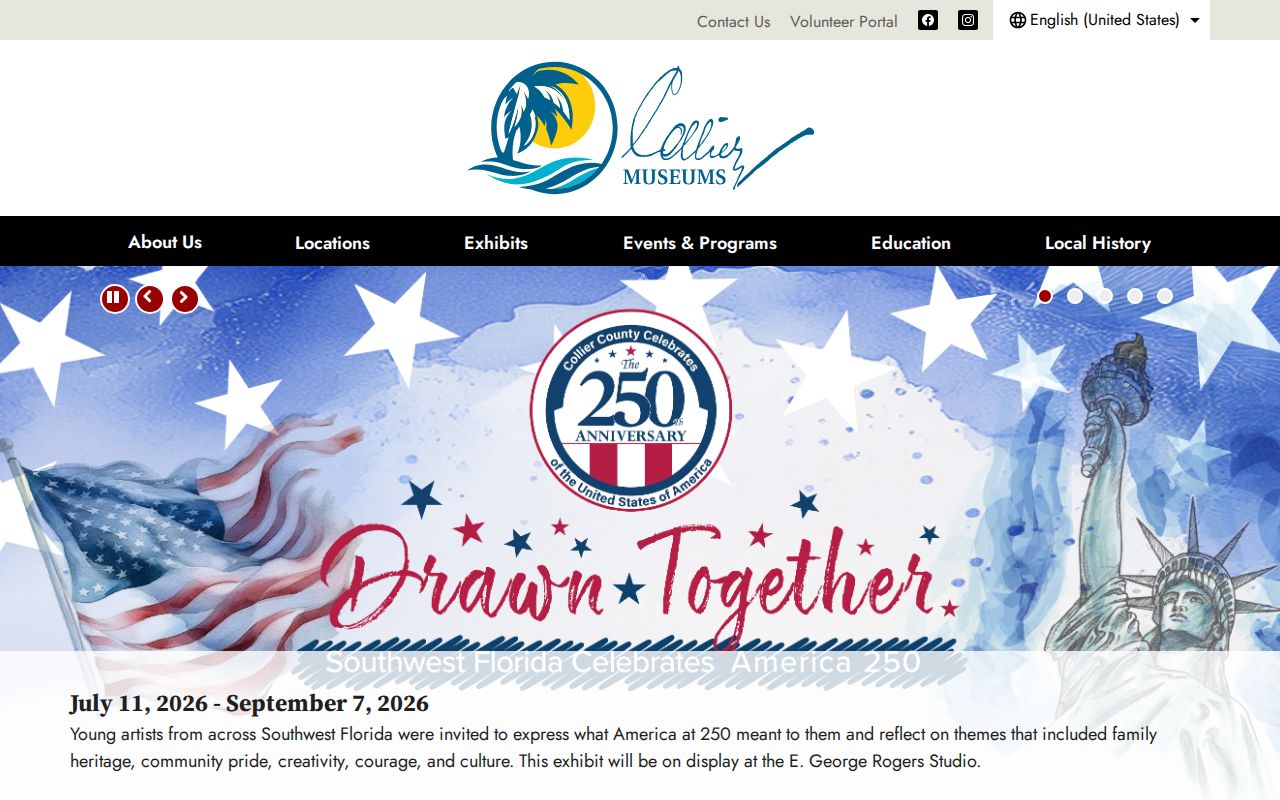
The museum network gives names and addresses their local setting, from coastal rail growth to Immokalee agriculture and Everglades communities. Contact collections staff rather than assuming every item can be searched online.
Understand Collier County Geography
Collier's directory problem is partly geographic. The county spans nearly 1,997 land square miles and grew from 375,752 residents in the 2020 Census to an estimated 417,131 in 2025. Incorporated Naples has roughly 20,000 full-time residents and about 16 square miles, yet "Naples, FL" appears across a much larger postal area. Marco Island and Everglades City are separate municipalities, while most Collier residents live in unincorporated communities.
Do not choose a permit office from the mailing city alone. Resolve an address to its folio, jurisdiction, and tax district. Large rural parcels, high-rise condominiums, seasonal homes, and absentee owners also make a county residents directory less uniform than a city list.
Note: A postal place name routes mail; it does not establish municipal jurisdiction or identify the people who occupy a parcel.
Request Missing Collier Records
Florida's constitutional access right and chapter 119 allow any person to inspect or copy nonexempt public records at reasonable times and under reasonable conditions. A requester need not state a purpose, use a special form, or be a Florida citizen. Agencies must respond in good faith, but Florida sets no fixed number of days. A delay may cover the reasonable time needed to locate records and redact exempt information.
Ask for a date range, office, record type, address, and native electronic fields when known. Standard statutory paper charges are generally up to 15 cents for one-sided pages, 20 cents for two-sided pages, and $1 for certification. Actual duplication cost and a special service charge may apply to extensive staff or technology work. The official text of Florida Statutes chapter 119 supplies the governing details.
Protect Collier Resident Privacy
Open records still have firm limits. Florida's Address Confidentiality Program provides a substitute address and mail forwarding to qualified domestic-violence victims. Other statutes protect some high-risk personnel, victim information, motor-vehicle data, vital records, and court material. A custodian may redact only when an exemption applies, yet a public request cannot override one.
Commercial people-finder pages can be stale, merge two people, or republish old addresses. Official rolls are usually free to inspect and show their custodian, while commercial lists may hide sources and charge for uncertain matches. Correct an error at the source office first, then use a publisher's privacy process with the least identity data needed.
Lawful use. Use Collier County resident records for family history, estate work, civic research, and personal safety. Never use an address to stalk, harass, threaten, or harm anyone.
Avoid Costly Collier Deed Offers
A private deed-copy solicitation can charge far more than the official route. Collier Clerk users can view and print ordinary released deed images online at no cost. Recording charges $1 per page for an official copy and $2 per document for certification; a staff search costs $2 per name, instrument, and year. Those services are distinct, so pay for certification only when an agency, court, or transaction requires it.
Compare any mail offer with the Clerk's current recording fee schedule. Check the sender and requested payment on an official phone number. Similar caution applies to fake court fines and paid unclaimed-property recovery: Florida Treasure Hunt searches and claims are free, and the Sheriff's Office says it does not solicit bond or fine payment by phone.